
43 | Interview: Db
From "Douchebags" to global travel brand

If you don’t know about Douchebags (since — perhaps more elegantly — renamed Db), you probably should.
They’re a lowercase b brand built with intention and trust and laser-focused on serving a specific community. Their differentiation begins with their sleek, Scando-forward luggage and the way in which they seem to be built both for, and through, their audience.
And let’s not forget about the consistency of their brand storytelling, which inspired me to reach out to CMO Jon Weaver on that anxiety-inducing networking platform. He was kind enough to respond, and our conversation follows below.
Origin in a nutshell: Started by mechanical engineer/traveling mountaineer and surfer Truls Bratass in 2010, who found himself frustrated at luggage that kept dinging his surfboards. A fortuitous meeting in the waves with Norwegian freeskiing legend and early vlogger Jon Olsson led to Douchebags’s first bag, the ski and snowboard-toting Snowroller.
Original name: Douchebags (changed to “Db” in 2019 and you get the feeling Truls wasn’t the one demanding the change)
Audience: The “defiant creative” (started for globe-trotting action sports enthusiasts, now for capital C creatives)
Brand purpose: To enable meaningful journeys
Positioning: To be the bag and luggage brand of the creative outdoor community, differentiating through design, durability, and community focus.
Competitors: Rimowa (luxury); Horizn Studios, Floyd, Away (DTC); Tumi, Samsonite (heritage)
Platform approach:
LinkedIn - Corporate, b2b updates
Instagram - Product and some storytelling, and perhaps a content franchise or two in the future
YouTube - Longer-form storytelling; product demonstrations
TikTok - “We create some content for this channel but need to go all in and give someone the keys ...”
Notable founder quote:
“We are a product and community company.”
- Truls Bratass, co-founder
Notable designer quote:
“I feel like there’s a generation of creatives, of travelers, that don’t think of travel as a luxury, but more a part of their creative pursuit or journey.”
- Former Db creative director Vincent Laine
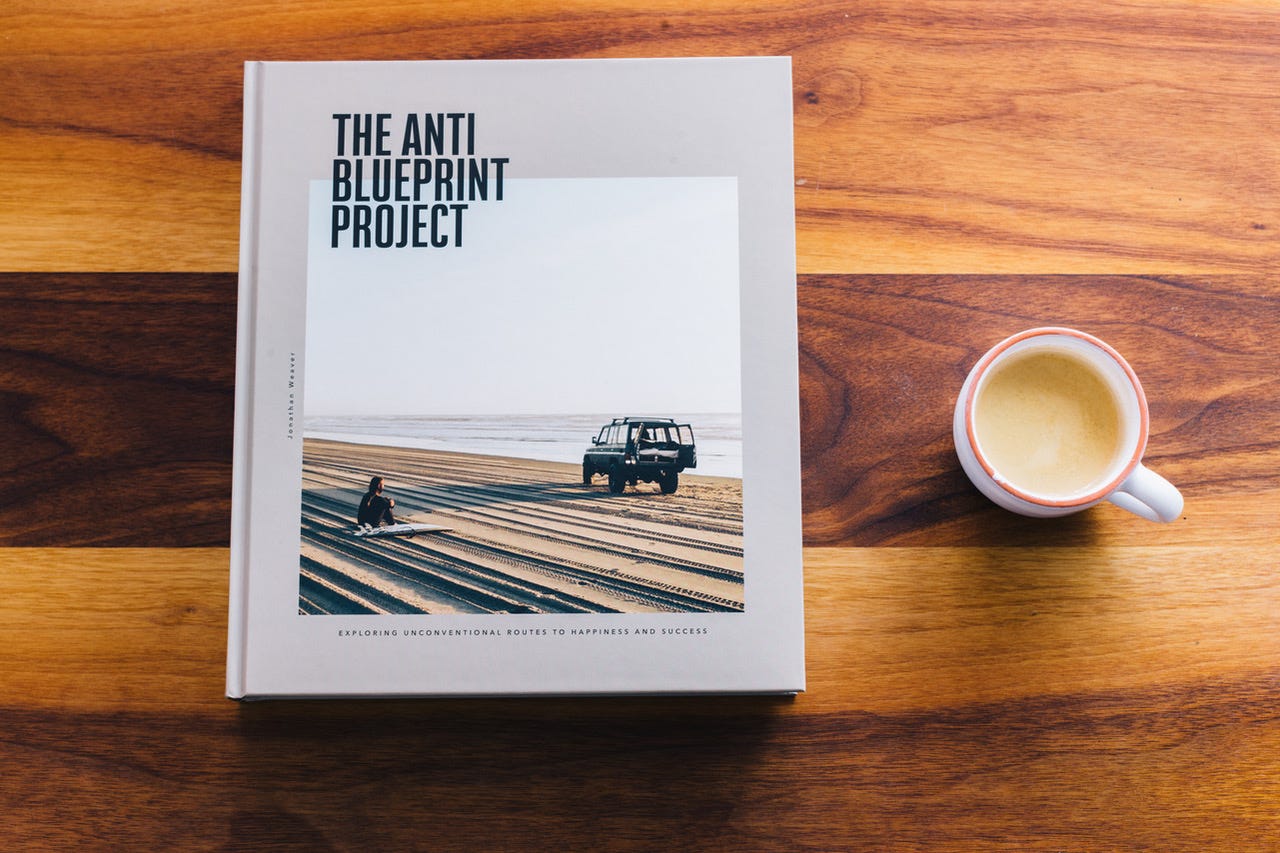
At the helm for more than 3 years, CMO Jonathan Weaver’s career has been spent understanding and communicating to an ever-evolving group of sporting consumers, first for Burton snowboards, then for more than a decade at Nike. He’s also written a book — The Anti-Blueprint Project —that redefines the idea of “making it” to a generation of teenagers that find themselves a bit lost. A native of England, he lives in Portugal with his family, where one of the highlights of the year is packing up the family for their annual trek to ski and snowboard in the alps.
BNS: Luggage is one of those wide-open commodities categories, where there is no truly dominant player. How do you think about differentiation?
JW: First of all I'll say we're not trying to go up against Rimowa. We know that they are the pinnacle, the benchmark by which all are measured. They've got a hundred years of heritage, and they have excellent brand awareness amongst the right consumer group. We see opportunity against the rest. But we can't just put more money against paid ads and try and defeat these companies because some have received hundreds of millions in backing and so they're always going to beat you in a numbers game. Our point of differentiation is, one, that the product is different enough and it's rugged enough and blended with a (unique) Scandinavian design aesthetic. Then, two, we always try to do very unique things that can gain us awareness. We make things like (oversized art carry system) bags for the photographer Olav Stubberd. We also made pizza boxes for a store in Paris who have a sneaker store and a pizza shop, because, you know, us making a co-branded backpack for them probably isn't news, but a pizza box is kind of different. Thirdly we aim to create unique engaging content experiences which captures our audience (and new people along the way). A lot of that comes from many of our background working at brands in the outdoor and action sports space where that approach is common yet less so in the luggage space which is quite USP-focused traditional marketing.
What about at stores?
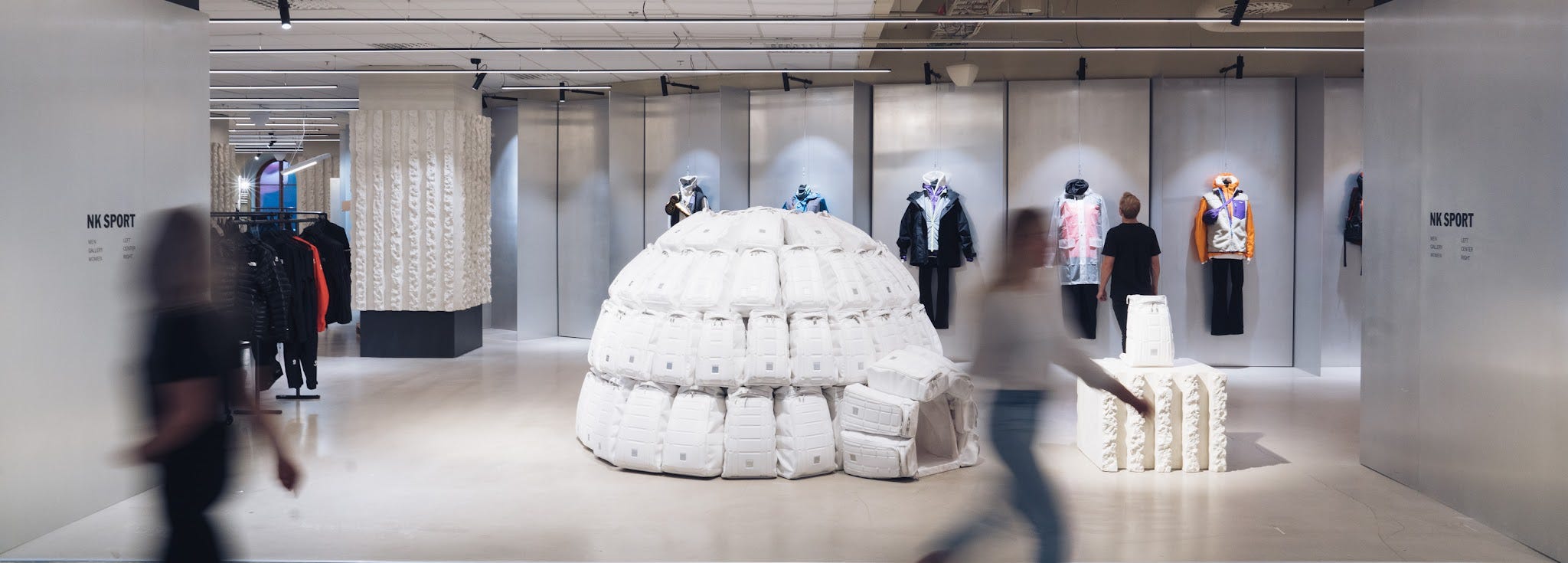
I think when we've shown up at retail, we try to do things differently. We do these installations, sometimes, like an igloo that we build out of backpacks. The point of this is if we show up on a backpack wall, is there enough differentiation?
So we try to do things differently in that regard because one of the challenges in the space is the old world of thinking. If you’ve been to some of the department stores, you will be the youngest person anywhere close to the luggage department. I went to one of the heritage stores in New York in January, and it’s on the 9th floor in the back, there’s 25 brands and it’s like the land time forgot. I struggle to see how we can stand out in that space.
We’re exploring what physical retail can look like, whether that’s in some of our best wholesale partner stores around the world or through shop-in-shops, or eventually our own spaces.
Of course, there’s also the marketing and storytelling you do as a major point of differentiation.
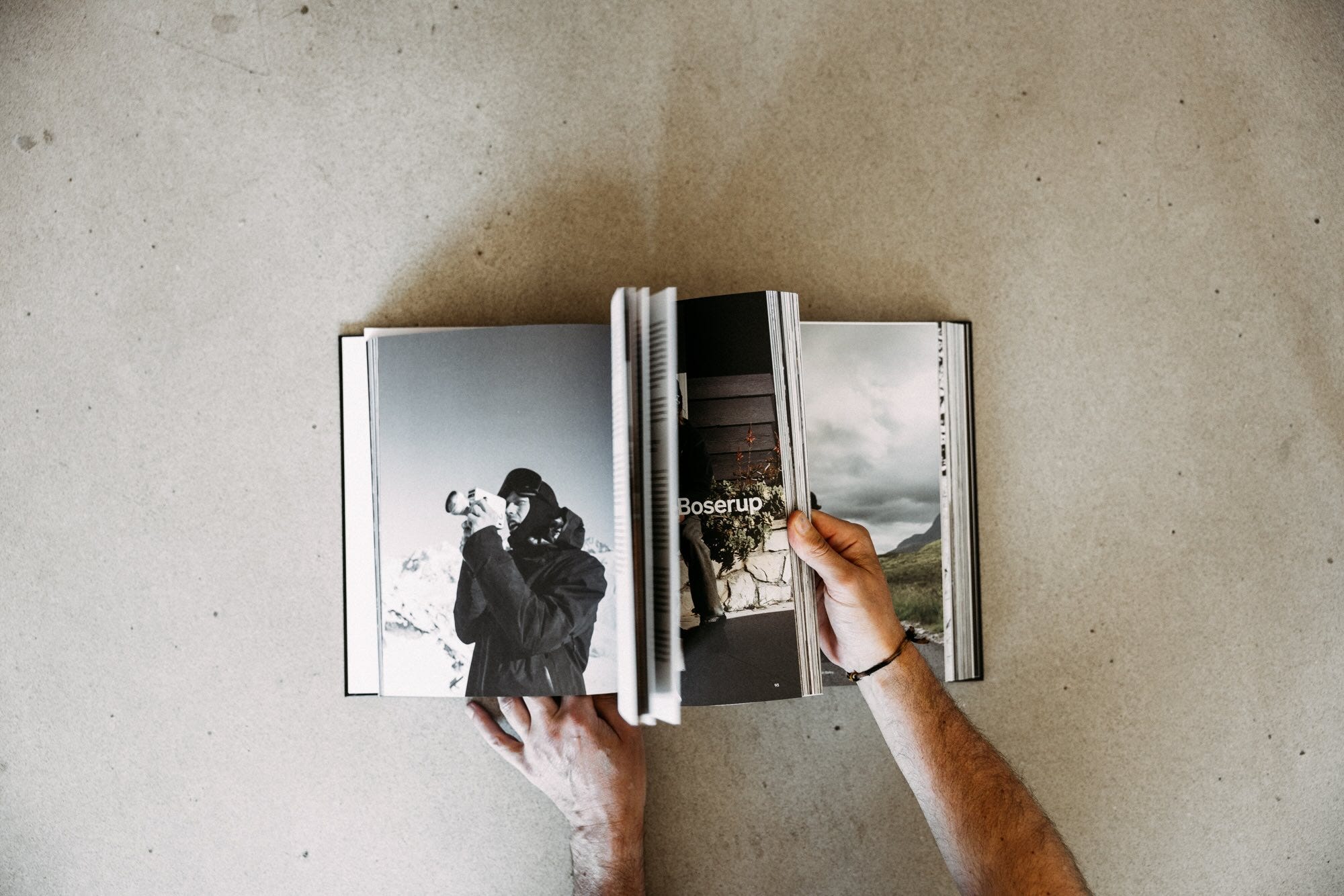
With the rise of outdoor and lifestyle culture, a lot of brands maybe have a product and then try and co-opt those spaces. But since we come from the outdoors and that's very authentic to us we have that to lean into. We have that storytelling and we do a lot of work in terms of brand- building content. We have a series on YouTube, “Pack Heavy, Chase Light” which explores the role of creatives around the world. We have this book we made that launched this year. If you just show up paying Google and Meta for your ads, you're always probably going to lose unless you do the work to support around it.
When we made the first season of “Pack Heavy, Chase Light” there was definitely people who questioned it and why we wouldn’t just throw more money into the major platforms on lower funnel ads but the reality is we always saw it as a long-tail thing that will become a part of our brand.
I think marketers need to be comfortable with picking their pillars or their content franchises and just saying, ‘Hey this is going to be a thing for us for the next three to five years and we know it will take time to build momentum.’ It’s easy to say we need some quick wins, or we need this and that. I think you need to have your foundation and then add a couple of those quick wins as you go and then brands can have their moment.
To that end there are also things we do as a company which are the right thing to do, not necessarily helping the bottom line but with the intent of a sustainable long term healthy business. Becoming B corp certified in 2023 was one of those.
“Pack Heavy, Chase Light” in particular seems to be solely focused on the traveling lives of your core audience.
If someone asked me, ‘What's your job?’ I’d say that we have to tear down the walls that are being created and make people realize that if you go out into the world, you understand people and you learn empathy and come back a better person.
You understand other ways of being.
That’s for me the number one thing. So a lot of our bigger brand campaign work is focused on that. A lot of “Pack Heavy, Chase Light” is focused on young creatives who've gone out experienced the world and realize what it can give back to them if you throw yourself into the world.
That YouTube series is one example, and you had another nice one recently: “Ragnarök” of two pairs competing in a race, traveling with planes, trains and automobiles from Oslo to Copenhagen. How do you build the internal culture to come up with these ideas?
We have a young creative team and especially an art director, William, who came to us as an intern. I think he’s 24 now and he's just very, very talented. He's very open-minded. He appreciates modern culture but you easily find him referring to ads from the 80s whilst listening to Pulp or some 90s classic and a lot of the things we will just brainstorm as a small team. I'll aim to come with the insight to push against and ask what do we think can pay this off? So, it's usually three or four of us. I'll usually walk my CEO through an idea which is somewhat baked or —you know — in decent shape. I mean, I'll always try and come with two or three ideas so there's a couple of darlings to kill. And then once he says, "Yeah, this looks good" then we just kind of press go and make the thing.
Sounds like there’s not as much pressure on performance metrics for the content and storytelling you put out.
On the brand marketing side of the business we have been lucky that we have been empowered to do what feels right for the brand so we have always had that opportunity, which I am eternally thankful for. Last year I covered on the digital side of the marketing channel and so have learnt the push and pull relationship of both sides but, yes, we’re in a good position. That has led to us making books, YouTube series, holding live events like (limited-seat event series) Creative Exchange with people like Chris Burkard, that's the good stuff…
That said, we do create a lot of our best work trying to gain new audiences and awareness by doing things that push the edges in a way that we reap the digital reward, including the summer campaign “what the f&ck happened to being excited about the future" or the Summer ’24 airport commercial or holiday campaign - keep dreaming differently — all of which are built for our target consumer of the defiant creative. Creating work that resonates to their life is what we are here for.
Your product roadmap seems pretty dialed, and your marketing is consistent. What aspects of the brand are still underdeveloped?
We’ve been laying a lot of the foundations this year with bringing in some new sales teams globally to help us power the next stage, including Waypoint and PlusPlus in the US. For marketing the next stage of growth and the awareness we need, we likely need to invest in more experiential, more on-the-ground marketing to bring people physically in to the brand, along with a couple more at scale partnerships — as we do with (Norwegian airline) SAS and Alpine (F1 team) — to get our name out there. We’ve also been fortunate enough to receive the backing of LVMH Venture Fund as a minority investor and also Erling Haaland who came in as an investor earlier this year.
That is an area where we have to try things and know that some will work better than others and my role is to keep the team taking the shots. If Messi takes a free kick and clips the cross bar, you wouldn’t say don’t try that again, you would see what you can do to help him sharpen his tool box. Same is true in marketing, my role is to provide that to the team.
I say all of this because, to your original question, we are still a small disrupter brand and the market is way underdeveloped in terms of the percentage of the market we are serving. We’re excited for the next chapter.